Start Disclosure Schedules at LOI: 4–6 Weeks Playbook for Deal Teams
Disclosure schedules are the contract attachments that qualify your representations and warranties in a merger or acquisition agreement. Draft them well, and they protect the seller from post-closing indemnity claims. Miss something, and that omission becomes the buyer’s favorite exhibit in an indemnification demand eighteen months later. Start the work at LOI, assign an owner to every schedule, and update them honestly before closing.
TL;DR:
Properly drafted disclosure schedules should include detailed, specific information about litigation, contracts, intellectual property, and environmental issues to prevent post-closing claims.
Sellers must start drafting schedules at LOI, assign clear owners for each section, and update them honestly before closing to avoid costly omissions.
Vague disclosures or failure to cross-reference documents accurately can lead to disputes, rescission claims, and rejection of insurance claims.
Effective schedule preparation relies on project management tools and discipline, with focus on clarity, consistency, and jurisdiction-specific legal standards.
Using a fractional legal team can improve schedule quality and timeliness during complex deals by coordinating across departments and managing updates.
Chief Legal OfficeKeep Deal Legal Work MovingChief Legal Office provides senior legal leadership and a dedicated team to organize priorities, agreements, diligence materials, and enterprise risk.Explore Chief Legal Office
Table of Contents
What Disclosure Schedules Are and How They Work in the Agreement
Why Disclosure Schedules Matter: Practical Consequences for Buyers and Sellers
Typical Disclosure Schedule Sections: What Buyers Expect to See
How to Prepare Disclosure Schedules: Process, Owners, and Timeline
Common Disclosure Schedule Drafting Pitfalls and Negotiation Points
Updating Disclosure Schedules Between Signing and Closing
Legal Standards and Jurisdictional Variations in Disclosure Schedules
Digital Tools for Preparing and Managing Disclosure Schedules
Chief Legal Office Rules of Thumb for Disclosure Schedules
How Chief Legal Office Supports Disclosure Schedule Preparation
Sources
What Disclosure Schedules Are and How They Work in the Agreement
A disclosure schedule is not a formality tacked onto the back of a purchase agreement. It is where the seller tells the buyer exactly where the reps and warranties are true, and where they are not. Every representation in the agreement gets read together with the corresponding schedule entry, which is why lawyers call this “incorporation by reference.” If Section 4.12 says there is no pending litigation “except as set forth on Schedule 4.12,” that schedule is doing the legal work.
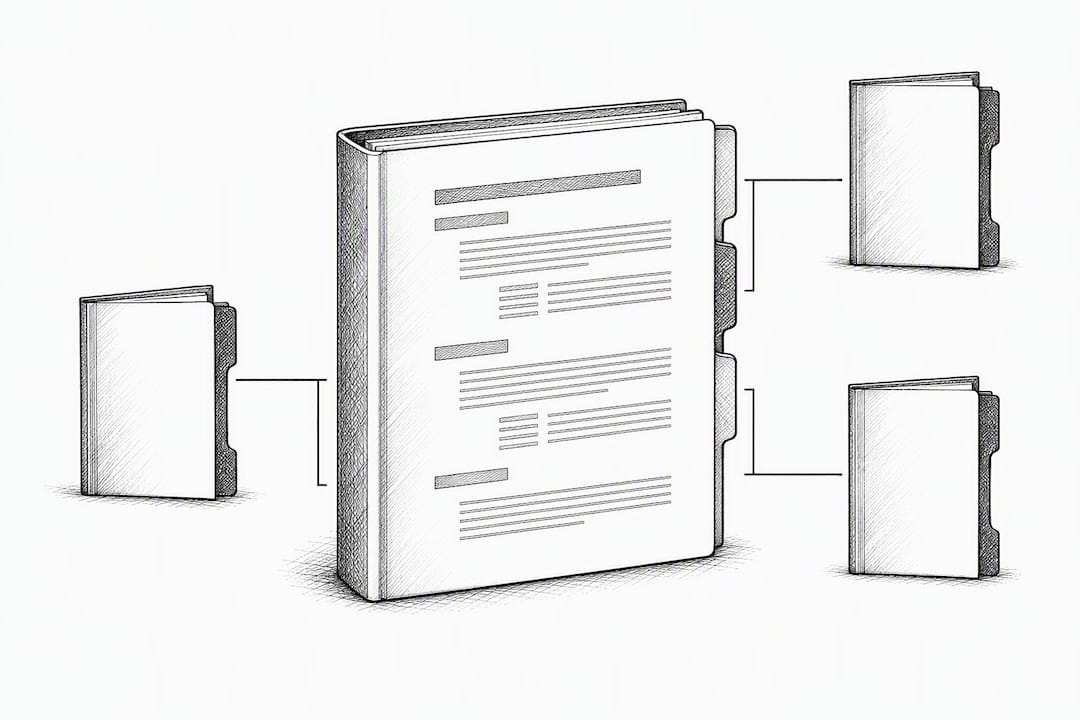
Schedules play two roles at once. They affirmatively hand the buyer diligence information (here is our material contract list), and they carve out exceptions that limit what the seller is on the hook for later (here is the one contract with a change-of-control clause). This dual function is exactly why generic guidance treats disclosure schedules as a distinct practice area rather than boilerplate. Knowledge qualifiers (“to the Seller’s knowledge”) and cross-reference language between schedules matter more than most first-time sellers expect. Sloppy cross-references are how a perfectly true disclosure fails to protect anyone.
Why Disclosure Schedules Matter: Practical Consequences for Buyers and Sellers
Here is the part founders underestimate: a disclosure schedule is your insurance policy, written by you, before you know what will go wrong. Disclose a pending customer dispute clearly, and the buyer cannot later claim you breached a representation about litigation. Leave it off, and you have handed the buyer a clean indemnification claim, often funded straight out of escrow.
Under-disclosure is a leading cause of post-closing disputes, according to M&A drafting commentary on seller strategy. The consequences run further than a single indemnity claim. A significant enough omission can support rescission arguments in extreme cases, and it can also affect coverage under representations and warranties insurance, since underwriters price that policy based on the schedules disclosed at signing. An R&W insurer that later discovers a known issue was never disclosed will point to it as grounds to deny the claim entirely. The schedule you write in week three of diligence is the document an insurer, a judge, or an arbitrator reads two years from now.
Typical Disclosure Schedule Sections: What Buyers Expect to See
Most purchase agreements call for a similar set of schedules, though the exact list shifts by deal size and industry. A useful breakdown of standard schedule sections covers these core categories:
Litigation. Every pending or threatened claim, regardless of dollar amount, with case name, forum, and status.
Material contracts. Agreements above a negotiated dollar threshold, plus anything with a change-of-control or exclusivity clause regardless of size.
Intellectual property. Registered marks, patents, pending applications, and any third-party licenses the business depends on.
Employees and benefits. Compensation arrangements, severance triggers, and ERISA plan details.
Taxes. Open audits, unresolved assessments, and jurisdictions where returns are outstanding.
Real estate and permits. Leases, licenses, and any permit renewal that is not automatic.
Insurance. Active policies, recent claims history, and any coverage gaps.
Customer and supplier concentration. Any relationship representing a meaningful share of revenue or supply.
Related-party transactions. Anything involving an owner, officer, or their family, no matter how small.
Environmental matters. Known contamination, remediation obligations, or prior violations.
The difference between a useful entry and a useless one comes down to specificity. “Various employment matters may exist” tells the buyer nothing and protects the seller even less. “Wrongful termination claim filed by [name], [court], Case No. [x], filed [date], seeking $[amount] in damages” gives the buyer what it needs and gives the seller an actual defense later. Vague entries routinely fail to satisfy the disclosure standard courts and buyers expect, a point echoed consistently in Practical Law’s glossary treatment of the term. If you want to see what a completed schedule actually looks like in practice, the SEC’s public filing archive has real exhibit examples worth studying before you draft your first one.
How to Prepare Disclosure Schedules: Process, Owners, and Timeline
The single biggest mistake sellers make is treating disclosure schedules as a post-signing chore. Start the work when you sign the letter of intent, not after the purchase agreement is drafted. A typical drafting window runs four to six weeks, longer for complex or multi-entity businesses, and that window disappears fast once buyer’s counsel starts sending redlines.
A workable process looks like this:
Assign an owner per schedule at LOI. Finance owns tax and material contracts data. HR owns employee and benefits schedules. Whoever runs IP owns the intellectual property list. Legal coordinates and drafts, but does not generate the underlying facts alone.
Build a schedule shell early, keyed to the representations in the latest draft purchase agreement, so each schedule has a clear home before information starts arriving.
Cross-reference everything to the data room. Every schedule entry that cites a contract or document should point to its exact data room index number.
Circulate drafts for internal sign-off before sending to buyer’s counsel, so operational leaders confirm accuracy, not just legal.
Version-control ruthlessly. Track changes and date every draft; buyer’s counsel will ask what changed and when.
Pro Tip: Assign one person, usually deal counsel, to read every schedule against every other schedule before signing. Contradictions between the litigation schedule and the material contracts schedule are one of the most common last-minute fire drills in diligence.
Common Disclosure Schedule Drafting Pitfalls and Negotiation Points
Under-disclosure is the expensive mistake, but it is rarely intentional. Related-party transactions get missed because nobody thinks of a cousin’s consulting invoice as a “related party.” Oral contracts get skipped because nobody wrote them down. Pending audits get left off because the CFO assumed the buyer already knew.
Over-disclosure carries its own risk. Dumping every minor issue onto a schedule to “be safe” can spook a buyer into a retrade on price, or worse, a walk-away, right before closing. The fix is disclosing everything material, framed factually and without editorializing, so nothing reads as an alarm bell that isn’t one.
Three negotiation points decide how much of this risk each side carries: the materiality threshold for what must be disclosed, the scope of knowledge qualifiers attached to each representation, and whether the buyer gets walk-away rights if a bring-down update reveals something material.
Updating Disclosure Schedules Between Signing and Closing
Deals rarely close the day they sign. Between signing and closing, sellers typically must “bring down” the schedules, updating them for anything material that happened since signing. Most agreements require written notice of updates and let the buyer decide whether an update is significant enough to trigger a termination right or price adjustment. Document each update with a date and a materiality assessment, get sign-off from the same schedule owner who drafted it originally, and send buyer’s counsel a clean, dated redline rather than a verbal heads-up. Surprises delivered the week of closing are the fastest way to blow up a deal that was otherwise done.
Legal Standards and Jurisdictional Variations in Disclosure Schedules
There is no single national standard governing what counts as adequate disclosure. State contract law and, for public companies, federal securities law each shape how courts read a disclosure schedule when a dispute lands in litigation. Delaware courts, where a large share of M&A disputes get litigated, tend to hold sellers to the plain language of the schedule itself rather than what a seller privately believed was “close enough.” That makes precise drafting a legal necessity, not a style preference.
Public and private deals also diverge in practice. Public company transactions face SEC disclosure obligations layered on top of the purchase agreement schedules, and drafting guides tracking M&A trends note that private deals give parties more room to negotiate materiality thresholds and update mechanics without regulatory overlay. Cross-border deals add another layer entirely, since disclosure norms around what buyers expect as “customary” vary by country and by how aggressively local courts enforce knowledge qualifiers.
None of this means you need fifty state-specific templates. It means the governing law clause in your purchase agreement is not boilerplate, and whoever drafts your schedules should know how the chosen jurisdiction actually treats disclosure disputes when they land in court.
Digital Tools for Preparing and Managing Disclosure Schedules
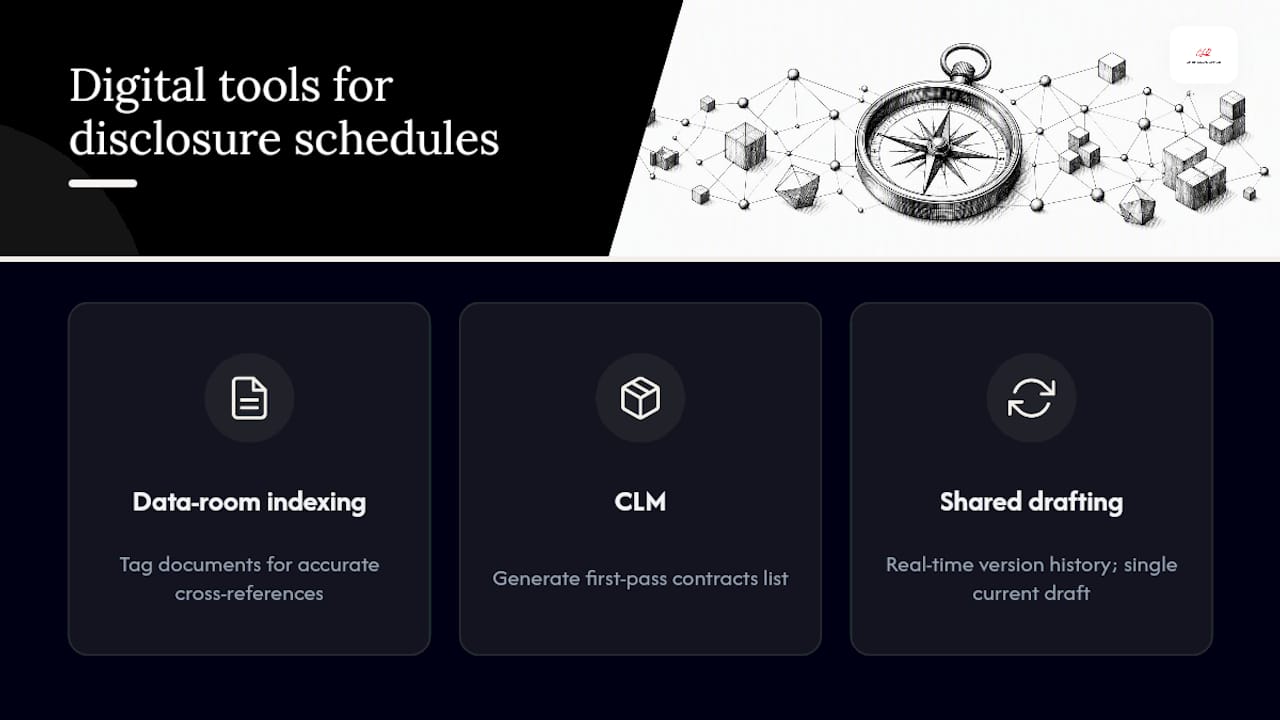
Most disclosure schedule failures are not legal drafting failures. They are project management failures, someone forgot to ask finance for the updated contract list, or the litigation schedule never got reconciled against the data room index. Technology helps here more than clever drafting does.
Data room platforms with built-in indexing let you tag every document that a schedule entry references, so cross-references stay accurate as new documents get uploaded. Contract lifecycle management tools can generate a first-pass material contracts list straight from stored agreements, cutting the manual hunt-and-peck that eats the first two weeks of any schedule project. Shared drafting platforms with real-time version history solve the “which draft is current” problem that plagues multi-owner schedule projects. None of these tools replace legal judgment about what is material or how a knowledge qualifier should read. What they do is take the administrative weight off a process that otherwise runs on spreadsheets, email chains, and someone’s memory of what changed last Tuesday.
Chief Legal Office Rules of Thumb for Disclosure Schedules
Three rules hold up across nearly every deal: start at LOI, not after the purchase agreement is drafted; assign a named owner to every schedule, not just to “legal” generally; and favor specific, factual disclosure over vague hedging every time. Teams often build schedule templates once and reuse the structure across deals, so the second transaction moves faster than the first.
— Amy Natasha Osteen
How Chief Legal Office Supports Disclosure Schedule Preparation
Disclosure schedules are exactly the kind of work that exposes the gap between “we have a lawyer” and “we have a legal department.” Using a fractional legal team is an alternative to hiring outside counsel by the hour or relying on a single advisor to draft, chase, and reconcile every schedule alone. Instead, a team led by a senior in-house attorney coordinates schedule owners across finance, HR, and operations, manages the data room cross-referencing, and handles the bring-down process without dropping other legal work on your desk.

That matters most in deals with real complexity, tight timelines, or a leadership team that is already stretched managing the transaction itself. If you are heading into a sale, capital raise, or acquisition and need a team that can own schedule prep from LOI through closing, explore Chief Legal Office’s fractional General Counsel services and get a sense of how the engagement would actually run for your deal.
Sources
Disclosure schedules: Practice Note (Practical Law / Westlaw)
Preparing the disclosure schedules: the sell-side work that determines the deal (AEGIS LAW)
SEC filing — example disclosure schedule exhibit (SEC archive)
Recommended
The lawyerly fine print: This article is for general information, not legal advice…